

Hip Replacement
Our Services
Need Help?
Book A Consultation
What Is Hip Replacement?
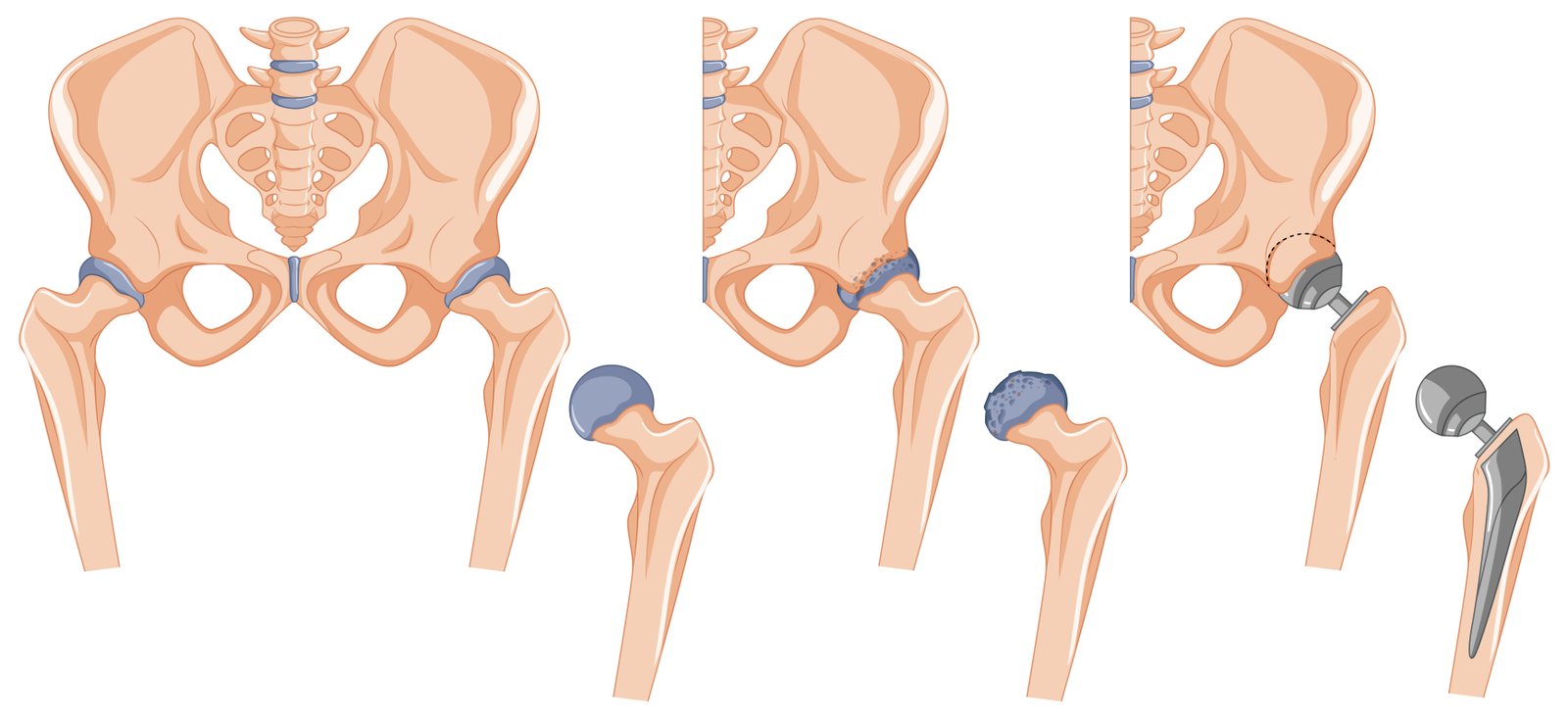
The hip is a ball-and-socket joint. When its smooth surfaces are badly damaged, walking, sitting and even sleeping become painful. In hip replacement surgery, the damaged ball and socket are replaced with artificial parts (implants) that move smoothly and take away the pain.
In a total hip replacement, both the ball and the socket are replaced. In a partial hip replacement, only the ball is replaced. This is commonly done for elderly patients who break the neck of the thigh bone after a fall.
When Is Hip Replacement Needed?
Hip replacement may be advised when medicines and physiotherapy no longer help and you have:
Groin or hip pain while walking
Hip pain at night or at rest
Difficulty wearing socks or shoes
Limping or a shorter-looking leg
Avascular necrosis (AVN) of the hip
Hip fracture in elderly patients
Total Hip Replacement
Both the ball and socket are replaced for severe arthritis, AVN and long-standing hip damage.
Partial Hip Replacement
Only the ball is replaced, mainly for hip fractures in elderly patients, to help them walk again early.
Recovery After Hip Replacement
Most patients stand and walk with a walker within a day or two of surgery. Physiotherapy starts in the hospital and continues at home, and you are taught safe ways to sit, get up, climb stairs and use the toilet while the new hip settles.
Most people return to daily activities in about 6 to 12 weeks, with much less pain than before. If your hip pain is due to arthritis and is still in an early stage, see our arthritis treatment. For injuries, see fracture and bone injury treatment.
Frequently Asked Questions
Modern hip implants usually last many years. Keeping a healthy weight, staying active and avoiding falls help the new hip last longer.
Most patients walk with a walker within a day or two of surgery. Over the next few weeks you move to a stick and then walk without support as advised.
For the first few weeks you may be advised to avoid deep bending, sitting on the floor, squatting and crossing your legs. Your doctor will explain what is safe for your type of surgery.
Yes, it is commonly done in elderly patients, especially after hip fractures, to help them get out of bed and walk early. Your overall health is checked carefully before surgery.
